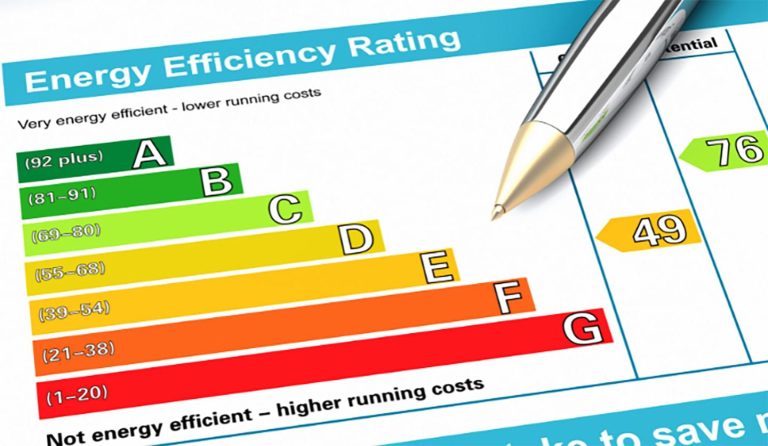
Landlord must ensure properties meet a Minimum Energy Efficiency Standard (MEES) of EPC Rating E or higher to be let, with stricter targets (C by 2030) proposed, and can face penalties for non-compliance or failure to register valid exemptions.
An EPC (valid for 10 years) is required for most lettings. They currently only need to be renewed (on expiry) upon change of tenure – i.e. sale of property or new tenant; there is no need to get a new one whilst a tenant is still in occupation.
Key Requirements (England & Wales)
- Current Minimum: EPC Rating E (applies to all tenancies from April 2020).
- Future Targets: Government is consulting on raising the standard to ‘C’ by 2030.
- EPC Requirement: A valid EPC must be provided to tenants and is needed to register exemptions.
- Penalties: Up to £5,000 per property for breaches (rating F/G without exemption).
- Cost Cap: Landlords only need to spend up to a £3,500 cost cap (including certain past improvements) to reach an E rating; if it costs more, an exemption can be registered.
- Exemptions: Can be registered on the PRS Exemptions Register (e.g., if works devalue the property by >5%, or no cost-effective improvements possible).
What Landlords Must Do
- Obtain an EPC (if not already held).
- Improve the property to at least an E rating, spending up to the £3,500 cap if necessary.
- Register an exemption if improvements aren’t feasible or affordable.
- Do not let properties below E (F or G) unless an exemption is registered.
It has been a legal requirement for all rentals from Oct 2008 to have a valid EPC. They currently lasts 10 years but would only need to be renewed (on expiry) upon change of tenure – i.e. sale of property or new tenant; there is no need to get a new one whilst a tenant is still in occupation.
They must be ordered prior to marketing, and there is a penalty £200 per breach for not having one.
All marketing material must show the rating, and it must be available to show any potential tenant.
A rating of F or G could be deemed to be cat 1 HHSRS hazard, and you now cannot issue new AST for an F or G rating, or continue with an existing let.
Landlord should adopt a “fabric first” approach to energy performance certificate (EPC) improvements primarily because it is the most effective and affordable way to reduce a property’s overall heat loss and energy demand, which is a recommended strategy by the government.
Tip: Keep a record of any insulation or draft proofing works (invoices, drawings, photos) for future EPC assessments.
EPC Checklist:-
An assessor will check the following:-
- Draught proofing
- Insulation
- Double glazing
- Age and efficiency of heating system
- Heating controls
- Type of lighting
- Solar panels
- Battery energy storage system
Landlords with an EPC rating of C or better benefit through higher tenant demand, increased rental yields (up to 10% more), lower void periods, potentially better mortgage rates, higher sale prices, future-proofing against stricter regulations (like proposed 2030 targets), and reduced maintenance issues (damp, mould). They are also likely to receive a discount when they register for HMO or other local authority licensing.
Tip: Check whether a property has an EPC or access yours online using Find an Energy Certificate
Tip: Ask your EPC assessor for a price which includes a floor plan, as they often offer this for a small extra cost; a floor plan is required for licensing and is useful when marketing the property or planning improvement works.